



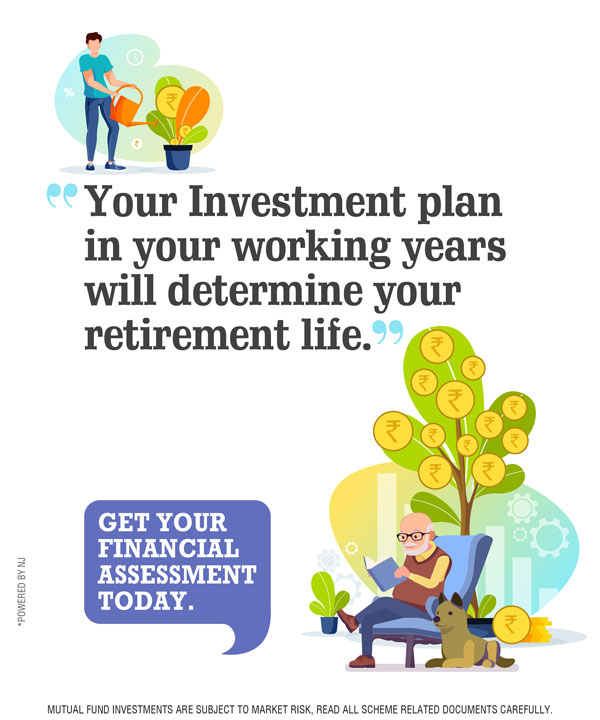


Investment Process: A Must For Investors
Investing has always been a challenge for everyone. Investors first understand investing as an art, something which is very subjective and directly related to their experience, knowledge, skills and behaviour. After one understands this, we begin to also understand the 'science' behind the investment process. The more mature investor you become, the more scientific it becomes for you. Successful investors have set processes, strategies and approach to decision-making which is not influenced by subjectivity, random opinions or emotions.
An investment process is a set of guidelines to govern the behaviour of investors in line with the basic investment principles. In an operational context, it would mean the steps to arrive at investment decisions and manage your investments in line with your overall financial objectives. It can also be seen as a set of inputs that are designed to drive an output - satisfactory investment returns.
An important missing piece here is your investment philosophy - what you believe investments are for you, what you expect out of them and how well you appreciate their existence in your life. Setting the right context for your investment process is like having the right ethics in a family or say culture in an organisation. Things won't work well in the long term if the right context of your investment process is missing. The best way to set the right context is you understand and appreciate the basic tenets /principles of investment management and to have patience, and reasonable /practical expectations.
Instead of a process, we would like our readers to see the below points as different tasks or elements of the entire investment management project. One should incorporate these elements while deciding upon your own investment process. A good financial products distributor or an advisor can help you greatly in designing your own process and also in following the same on an ongoing basis.
The first step and key element in any investment process is to set SMART goals. Achieving what you want financially requires you to identify, define, plan, invest and monitor till the same is achieved. And by setting SMART goals, we take the first step to success. SMART stands for - Specific, Measurable, Attainable, Rewarding and Time-bound. Having a holistic financial plan for yourself is an advanced, more elaborate exercise and if done, the SMART goals will form a part of your financial plan.
A risk profile is an evaluation of an individual's willingness and ability to take risks. A risk profile is important for determining a proper investment asset allocation for a portfolio. A risk profile is generally more critical if you are managing a portfolio that is not linked to any life goal or target in a time-bound manner. In such a case, the investment decision will be influenced by the requirements. Knowing your risk profile is thus very crucial if you are investing without goals.
Asset allocation is an age-old investment portfolio approach that aims to balance risk by dividing assets among major categories such as (a) equities (b) debt or fixed income instruments and (c) physical assets like gold, real estate and (d) cash. Most financial professionals believe that asset allocation is one of the most important decisions investors can make. Needless to say, your asset allocation should be in line with your risk profile. One of the advantages of asset allocation is the diversification of your risks in different asset classes, which helps you outperform over time as you take advantage of the volatility in different asset classes.
Once the Asset Allocation is decided, next comes the decision to choose the products. As you would better know, there are many options. For example, you can invest in equities either directly or through mutual funds, PMS and ETFs. For debt, again you can invest in bonds, debt funds or say in FDs. Even for something like gold, you can always invest in physical gold, jewellery, coins or digitally like Sovereign Gold Funds or gold mutual funds.
Choosing the right product will depend a lot on your own knowledge, experience, comfort, liquidity requirements and even costs and tax impact for some.
Rebalancing involves periodically buying or selling assets in a portfolio to maintain an original or desired level of asset allocation or risk. The investor may then decide to liquidate equities (when markets are up) and buy debt to get the portfolio back to the original target allocation. Rebalancing should be done on a regular frequency, say once every 6 months or even a year or when there are sharp /extreme market movements.
One should regularly review and monitor your portfolio to ensure if you are on the right track to achieve your investment goals by the defined date. The reviewing enables one to know how much shortfall will be there in case you continue the same investment. This enables you to take timely decisions. It also helps to understand if there is any need to remove non-performing products /instruments in your portfolio and make changes in your portfolio according to the changes in your personal life or any change in your financial situation.
These days, you can save yourself a lot of time and stress simply by setting most of your monthly tasks on autopilot. This includes your investments and the most popular way of doing it would be through mutual fund systematic plans. Automation would also mean that you make use of online tools, platforms and desks to make transactions seamlessly and to monitor your portfolio. Consolidating your entire portfolio at one desk is very important and just one more part of automation.
NJ E-wealth
The Time for Retirement Planning is Now!
Recently I came across a very interesting term called “sandwich generation” in an article. The term refers to those aged between the 30s to 50s i.e. the generation taking care of both their parents and children. An interesting point was being argued in the article that this generation, which included me, could be the last sandwich generation as we are not sure if our children would take care of us after retirement. This thought struck me right away and after some soul-searching, realisation finally dawned upon and I learned the bitter truth. We indeed could be the last sandwich generation!
When we talk about post-retirement life, an image comes to our mind - a beautiful home with a garden lawn where we can relax and enjoy. All of us desire a relaxed retirement with no financial or medical worries; to be independent to meet our expenses & be self-dependent. After all, no one would ever like to see themselves as Amitabh Bacchan in the hit film ‘Baghban’ after working hard all our lives. We would also not want to be a burden on our children when they are already under pressure to secure their own future.
There is a visible evolution in the Indian family system, with joint families getting disintegrated and more nuclear families taking their place. Young adults today are not hesitant to take up careers in foreign lands and cities far away from their home. Often the older generation is left to care for themselves where access to children is harder & infrequent. Financial freedom can definitely help address the financial concerns in such a situation & would also allow you to indulge in activities of your interest and avoid the so-called 'empty nest syndrome' when all your children are settled away from you. We must be prepared for the worst when it comes to retirement, even if all seems well at the moment. At the heart of relaxed & happy retirement life is financial freedom which cannot be left at the mercy of fate, culture or the expected love of our children.
Thanks to the advancement in medicines, better living conditions, nutrition, etc., the life expectancy figures are on a rise globally. The life expectancy of an Indian today is expected to be 70.42 years, which is steadily rising from 42 in 1960 to around 62 in 2000. We can safely assume that this will only increase in years to come, and we will perhaps get near to more advanced countries like the US (~79.1), China (~77.5) UK (~82) and Japan (~85). This raises some serious concerns. If we assume a life expectancy of say 80 after retiring at 60, that leaves us with nearly 20 years of our lives in the future without regular income - that's 25% of our entire life. To make matters more critical, we would not be at the best in terms of health and energy.
The yearly study by Mercer Global Pension Index marked India's retirement system falling into the last category of the 39 prominent countries, along with 7 other countries. The study found Netherlands & Denmark having the best systems while India was ranked at 34. India's low rank is mainly because it lags in all the three scores for adequacy (benefits, savings, tax support, etc), sustainability (coverage, contributions, etc) and integrity (regulation, costs, protection, etc). What is also alarming is that there is no pension or support system for the aged poor and the informal sector which consists of a majority of the population. The situation for a majority of the middle class is also not great and most are likely to depend on children for survival and maintenance. Except maybe government servants, all of us will have to depend on our own savings made during our life for our retirement.
The retirement day can be the happiest or the saddest day of your life, depending upon the retirement savings or retirement kitty that you have accumulated. The real question is how much do you really need? There is no one answer for this as there are many factors that have an impact. There are many calculators available that can help you to estimate the 'how much', but often people are taken aback by the figures given by these calculators. Hence, understanding the logic behind these calculations is very important to appreciate the amount needed. For determining any retirement kitty need, you need to follow the following steps…
To do this you will have to first decide the retirement age and then put a number for life expectancy. The difference between the life expectancy and your planned retirement age is your post-retirement years, which you need to plan for.
Finding the monthly income need properly is important to ensure that you can fund the household, medical and other expenses after retirement. Generally, you may consider 80% of your existing monthly expenses here.
The monthly income need would be growing, at say, the average retail inflation rate for the entire period between today & the end of the post-retirement years. Thus, we can have different pre- & post-retirement inflation rates which can be between 5 to 7%. Assuming a higher figure would be safer.
Next would be to assume the returns on investments done for the retirement kitty. We will need to assume a lower but safer rate of returns on these investments, which would generally be made in the debt asset class.
Considering the assumptions, the numbers can be relatively easy to visualise & calculate. To arrive at the retirement kitty, the returns and the principal component of the retirement kitty should match the cash flows of the growing monthly expenses. The difficult part is about making assumptions that can be easily impacted by several factors over the long term. The following retirement matrix can help you to get a brief idea of the retirement kitty needs. We have assumed current monthly expenses of Rs.50,000 in the matrix with inflation at 6%, post-tax returns on retirement kitty at 8% and life expectancy of 85 years to be on a safer side, negating the huge risk of living longer.
Your Present Age 30 35 40 45 50 55 60
Monthly Expenses - Age 60 2,87,174 2,14,593 1,60,356 1,19,827 89,541 66,910 49,999
Retirement Kitty (Rs. Lakhs) 688.77 514.69 384.60 287.40 214.76 160.48 119.92
Your Present Age 30 35 40 PPF 45 50 55 60
Monthly Expenses - Age 60 2,87,174 2,14,593 1,60,356 1,19,827 89,541 66,910 49,999
Retirement Kitty (Rs. Lakhs) 688.77 514.69 384.60 287.40 214.76 160.48 119.92
We have also calculated the monthly savings required from today to create this retirement kitty if invested at different rates of returns.
Monthly Savings Required 30 35 40 45 50 55 60
Returns @ 12% 22,356 30,237 41,811 60,387 95,860 1,97,871 NA
Returns @ 8% 48,587 56,260 67,161 84,584 1,18,467 2,18,597 NA
Monthly Savings Required 30 35 40 45 50 55 60
Returns @ 12% 22,356 30,237 41,811 60,387 95,860 1,97,871 NA
Returns @ 8% 48,587 56,260 67,161 84,584 1,18,467 2,18,597 NA
Clearly, if you are short of your monthly savings, the choice of asset classes get narrow. High returns could be generated only by investing in a growth asset class like equities in the long term, preferably through the monthly SIP route in mutual fund schemes. Please note, if you do not wish to take the risk, clearly, the suggested monthly savings would have to be increased drastically. A crucial point to note here is that the returns considered should be post-tax.
Retirement is perhaps the most profound life event many of us will ever experience. It is also a fact that most of us ignore planning for it till it is too late and/or we prioritise it after other goals in life. It is high time that we open our eyes and start visualising life after retirement to embrace the required sense of urgency for the challenge before us. Only then can we truly and meaningfully dream of relaxed evenings. The time to act is now.
NJ E-wealth
Understanding Health Insurance Cover Add-Ons & Riders
Health insurance policy is a must-have product today. However, while buying the health insurance cover, one comes across many add-ons and riders. These are basically the additional benefits or covers which do not usually come with standard /basic features of a policy.
The standard features and covers of a policy may not be adequate and/or attractive enough for many policy buyers. Not every individual has the same needs and to meet some of these requirements, the insurance companies provide comprehensive and customisable plans. Health plans from different insurers have different features, riders, premium costs, deductibles and copayments. These enhance the benefits, coverage or sum-assured for a policy on account of predetermined events. However, they have to be selected while purchasing the policy and they come at the cost of additional premiums. IRDA has imposed restrictions on the upper limit of 30% on the cost of all riders or add-ons as part of the collective premium under a single health insurance policy to protect policy buyers.
We now take a look at the most popular add-ons and riders in health insurance policies.
Critical illness mainly refers to any disease or illness that is terminal in nature such as heart attack, kidney failures, organ transplant, cancer, tumour, paralysis, multiple sclerosis, etc. The policyholder may opt for this as an independent cover or as an add-on cover to a health policy. Such a cover provides for immediate payment of a specified amount upon diagnosis of a covered critical illness, irrespective of any actual expenses on treatment. Normally, most insurers provide cover for at least 10-15 critical illnesses, while some insurers may even provide cover for over 30 conditions.
Many companies put a cap on the maximum room rent and include general, standard or semi-private rooms in their policies. With this health insurance rider, you can either increase the sub-limit provided for hospital room rent under your policy or opt for no sub-limit on room rents. With the room rent waiver rider, one can avail a room of their choice without paying extra at the time of admission. The room rent can have a huge impact on your final hospital bills as most costs are calculated as per the room rates /category and if the room is not covered, then you may have to pay a huge sum from your pockets.
This rider covers all expenses related to pregnancy and childbirth after the waiting period is over. The waiting period could be 24 months or more and may differ as per the insurance company. The cover is limited to 2 deliveries during the policy period. Even pre-natal and post-natal expenses are usually covered under this benefit. Some policies may even offer 'New Born Baby Cover' where the child can be covered during hospitalisation for a certain maximum of days. Needless to say, this cover is only suitable for those planning to have kids after the waiting period.
This rider provides for the daily cash allowance, as per the plan chosen, from the insurer to the policyholder during hospitalisation. Generally, the amount is paid for each and every completed day of hospitalisation, subject to a certain minimum and a maximum number of consecutive days as per the policy. This helps the policyholder to take care of the hospital and other medical expenses during this period.
Like critical illness, a personal accident cover can be also taken as a stand-alone policy. A personal accident rider cover provides for a fixed sum upon the unfortunate event of an 'Accidental Death' or 'Permanent Total Disablement or 'Temporary Total Disablement', resulting from an accident, as per the policy terms offered by the insurer. This cover is usually offered only once during the policy period and once a claim becomes payable under this cover, no benefit will be provided under the same thereafter.
The government has now also recognised alternative /traditional treatment practices and therapies under AYUSH which stands for Ayurveda, Unani, Siddha and Homeopathy. Under this add-on, the policyholder receives financial coverage for AYUSH treatment methods. However, the treatment must be undertaken at a government hospital or in any institute recognised by the government and/or by an accredited body.
Choosing an insurance policy is an important, long-term decision. It is not just about saving tax. Thus, an effort should be made to find the right policy that actually works for you and meets your requirements. Elements like room rent limits, hospitalisation cover, maternity cover, etc can be customised as per your needs. In addition to riders like critical illness and personal accident, one can take a considered decision to take it as a stand-alone policy or as a rider. We strongly suggest that you seek guidance from your trusted insurance adviser /agent to make sure that the policy fits you perfectly like a glove.
loans
Loan
Flexi loans have a distinctive feature of borrowing funds, where you get access to a pre-approved loan limit based on your Investment folio. Borrow funds whenever you need them and repay when you have additional funds in hand. Also, pay interest only on the utilized fund.
Features and Benefits
LAS provides finance against your investments in the capital market. It is a liquidity available without liquidating your investments in times when funds are required.
Simply withdraw money from your loan limit sanctioned.
Repay the loan partially or fully any time whenever you have surplus funds, without any prepayment charges
No charges or additional documentation required to withdraw funds multiple times.
Withdraw and part-prepay funds through the online customer portal, Experia, for hassle-free and smooth processing.
Interest is charged every month only on utilized fund
Loan account is auto renewed every year 3 times. No account renewal charges.
You can get loan disbursement of Rs 4 lac to Rs. 10 Cr. You can sanction a loan 1.5 times of the pledged amount.
Fund Manager INTERVIEW
patner Interview
Mr. Saurabh Bhatia
Head - Fixed Income, DSP Mutual Fund
Saurabh is the head of Fixed Income at DSP Investment Managers. He joined the firm as Vice President-Fixed Income in July 2017. He has more than 18 years of experience in the domestic fixed income markets.
Read More

Kotak Deepak Amrutlal (ARN-127784)
AMFI REGISTERED MUTUAL FUND DISTRIBUTOR

Deepak A Kotak

  • Retirement Assessment
  • Child Future Assessment
  • Portfolio Review
  • Mutual Fund:Debt / Equity / ELSS

"We have taken due care and caution in compilation of this E Newsletter. The information has been obtained from various reliable sources. However it does not guarantee the accuracy, adequacy or completeness of any information and is not responsible for any errors or omissions of the results obtained from the use of such information. Investors should seek proper financial advise regarding the appropriateness of investing in any of the schemes stated, discussed or recommended in this newsletter and should realise that the statements regarding future prospects may or may not realise. Mutual fund investments are subject to market risks. Please read the offer document carefully before investing. Past performance is for indicative purpose only and is not necessarily a guide to the future performance."

This Page is Best Viewed with Chrome Browsers

"Often difficult road leads to beautiful destination. Always stay invested."

Start investing Now
For better investment contact