





Ways to Reduce Risks in Investments
"Successful Investing is managing risk, not avoiding it."
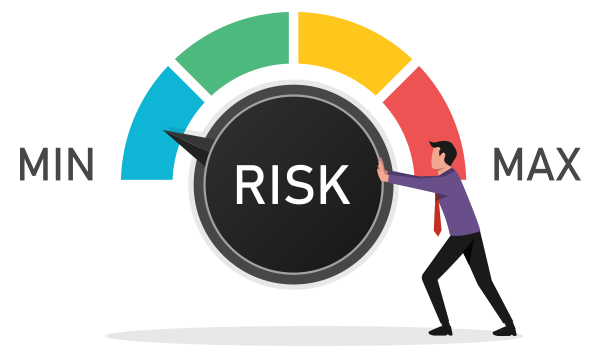
Benjamin Graham, the father of value investing might have said this decades ago, but it still holds true. Any investment entails some element of risk. Depending on the asset class and the underlying investment attributes, the risks would differ. If you are investing without understanding and managing risk, you are playing a dangerous game. We cannot completely eliminate investment risk, but we can definitely reduce it by managing it effectively. Now, you must be wondering how we should manage the risk? In this article, we will explore some smart ways to reduce such investment risk.
Risk tolerance refers to the ability of an investor to pursue the risk of losing the capital. Risk tolerance mainly depends on your financial obligations and age. As a general rule, younger investors tend to be more risk-tolerant than older investors. Knowing your risk tolerance will allow you to focus on instruments that match your risk appetite. It is critical to understand how much risk you can take and invest accordingly.
One thing that COVID has taught us is that a financial emergency can strike at any time! So, in the event of an emergency, we may need to redeem our investments anytime, even when the markets are down. This risk can be mitigated by maintaining adequate liquidity. Having liquid assets in your portfolio can help you in uncertain times and act as your financial guard. One of the ways of maintaining sufficient liquidity in your portfolio is by setting aside an Emergency Fund that should be equal to 6 to 8 months of expenses.
Asset allocation can be a crucial point to your overall investing pattern and one should have own asset allocation strategy rather than mimicking others. There are asset classes available to invest like Equity, Debt, Real-Estate, Gold, Commodities, Alternative Investments, etc. To help ensure the success of your portfolio, you may consider employing an asset allocation strategy that involves a mix of assets that are negatively correlated; for instance, when one asset class is not performing well, the other asset classes should perform well, reducing the overall risk of the portfolio. Here in India, retail investors primarily invest in Equity, Debt with some exposure to Gold.
By diversifying your portfolio across different asset classes, products, sectors, industries, etc., depending on the underlying product, you can reduce the overall investment risk, specifically the unsystematic risk which is limited in nature and not affecting the entire market uniformly. If you are investing in Equity Mutual funds, then you can diversify by investing in large, middle or small-cap equity mutual funds, style of investing and also at the AMC level. Diversification gives the portfolio some cushion for specific risks arising in select investments. However, diversification only to a point is logical and over-diversification is not recommended. The reason is, you may not get any additional benefit for diversification, the question of manageability and lastly, you may find non-performing investments creep into your portfolio. Warren Buffet once said, "wide diversification is only required when investors do not understand what they're doing".
In the formula of compounding, the variable of 'n' - period makes the real difference. Here, people often focus on 'r', i.e. how much return will it give, but ignore the 'n' factor. The holding /investment period also matters a lot in managing risk, especially when it comes to equities. We all know, equities are far too risky in the short term as it gets impacted by news, events and so on. But in the long term, the price growth would mimic the profit or revenue growth of the company. Risk management can be also done when you match the ideal investment horizon with the asset class. In equities, your focus should be to spend as much time in the market and forget about timing the market, which no one can predict.
It is always important to conduct due diligence before investing. If you are buying a stock for long-term investment purposes then you should consider the quality of management, the fundamentals and also the technicals while making buy/sell decisions. That's a lot for a normal investor. Investing through mutual funds eliminates this to a large extent but still requires some due diligence and this is where a mutual fund distributor helps a lot. If you blindly follow the tips of others and from what you hear and read in popular media, without your own research, it will lead to losses.
Having created a portfolio, one also needs to monitor their portfolio regularly. If you're a long-term investor, that doesn't mean that you invest and forget about your portfolio in this fast-paced world. Periodic reviews aid in identifying and closing the gaps. With time, your portfolio asset allocation changes, the economic fundamentals change, the personal risk profile and investment objectives change, the attributes and performance of underlying investment avenues also change, and so on. If you do not monitor your investments on a regular basis, the risks in your portfolio also increase. As a result, keeping track of your portfolio becomes critical and it is recommended that you revisit and review your portfolio at least once a year.
As every investment involves some risk, it is impossible to construct an investment portfolio that guarantees zero risk. However, by implementing the strategies discussed above, we can ensure that you will be able to find the appropriate balance between risk and return. Optimum risk management allows your investments to grow and help you to achieve your financial goals with ease.
NJ E-wealth
Union Budget 2023: A Brief Overview
Every year, the union budget is one of the most keenly watched events in the country. This year, the first budget of "Amrit Kaal" have fueled expectations for laying down the blueprint for PM's vision for India@100. Was it successful in doing so? What were the key takeaways? In this article, we will have a bird's eye view of the budget and try to unravel the undercurrents behind it.

The Vision for Amrit Kaal: The government's vision for the Amrit Kaal is for an empowered and inclusive economy that includes a technology-driven and knowledge-based economy with strong public finances, and a robust financial sector. To achieve this, Jan Bhagidari through Sabka Saath Sabka Prayas is essential. The economic agenda for achieving this vision focuses on three things: (i) facilitating ample opportunities for citizens, especially the youth, to fulfil their aspirations (ii) providing strong impetus to growth and job creation and (iii) strengthening macro-economic stability.

In line with this, the Union Budget 2023-24 focused on 7 priorities - the 'Saptrishis' which are as follows:

The government's philosophy of Sabka Sath Sabka Vikas includes development for farmers, women, youth, tribal groups, and other weak sections of society. It moves forward to agriculture for building digital public infrastructure, set-up an agricultural accelerator fund, and making India a global level for millets (Sree Anna). There is an agricultural credit of Rs.20 lakh crore targetted at animal husbandry, dairy and fisheries. Moreover, 157 nursing colleges are to be developed and a new plan is envisaged to promote research in pharmaceuticals. They have also announced to set up of a National Digital Library for children and adolescents.
The government has formed a Ministry of Tribal groups and developed the department of the North-Eastern region in India. Hence, a decision to provide financial assistance for sustainable micro irrigation in drought-prone areas of Karnataka has been taken. There will be many more teachers assigned to Eklavya Model. The setup for the digitalization of ancient inscriptions will be done.
An investment in infrastructure and productive capacity has been in the bigger picture to focus on impacting growth and development. Thus, there has been an increase in capital outlay to Rs.10 lakh crore which is a growth of 33%. Also, the highest ever capital outlay has been provided for Railways of ₹2.4 crores. Furthermore, the facility of extension for one year of 50-year interest-free loans has been given to state governments.
An initiative to ease out the business procedures has been reduced by lowering more than 39,000 compliances and 3,400 legal provisions have been decriminalized. Development and working with AI in India, establishments of e-courts, entity DigiLocker, setting up labs for 5G services, research grants for lab-grown diamonds (LGD), and national data governance are some of the areas where the government has taken a focal point. The government also has plans for AI (Artificial Intelligence) to be made in India to serve India's problems and announced a lot of measures in this direction.
The government has given a lifestyle for the environment to continue with the movement of an environment-friendly lifestyle. To build a green India, the budget cited that India will continue to move towards net zero carbon emissions by 2070. It also gave ₹19,700 crore outlay to green hydrogen and energy transition outlay of about ₹35,000 crores. In addition to this, a green credit program will also be activated for generating sustainable and responsive actions by firms and localities.
In order to let the youth achieve their dreams, the government has made a launch of PMKVY 4.0 to skill, re-skill, and upskill the "Amrit Peedhi" with the latest upbringings like AI, robotics, and 3D printing, etc. The appreciation for handicrafts products has also been an inclusion by establishing units malls. This would additionally promote the sale of ODOP (One District-One Product).
With the encouragement of the financial sector and to additionally boost this sector, some initiatives were taken. Setting up the National Financial Information Registry, increment of senior citizen savings scheme from ₹15 lakhs to ₹30 lakhs, and facility for women i.e., Mahila Samman Bachat Patra were some of them.
India's economic growth in the next year is estimated to be 6.5% in real terms in FY24, being the fastest-growing economy.
(i) Borrowings & Other Liabilities: 34% (ii) GST: 17% (iii) Corporation tax: 15% (iv) Income Tax: 15% (v) Excise Duties: 7% (vi) Customs: 4% (vii) Non-Tax Receipts: 6% (viii) Non-Debt Capital Receipts: 2%
(i) Interest payments: 20% (ii) States' share of taxes & duties: 18% (iii) Central Sector Schemes: 17% (iv) Finance Commission & Other Transfers: 9% (v) Centrally Sponsored Scheme: 9% (vi) Other Expenditure: 8% (vii) Subsidies: 7% (viii) Defence: 8% (ix) Pensions: 4%
For 2023-24, the total expenditure is estimated to be ₹45.03 lakh crore higher than ₹41.87 lakh crore (2022-23).
The revised estimated total receipts (other than borrowings) in 2023-24 are expected to be ₹27.2 lakh crore, under which the net tax receipts are ₹20.9 lakh crore. This implies that the government has the fiscal capacity to maintain the support and increase capital expenditure when required.
There was a retainment of the fiscal deficit target of 6.4% in the revised estimate for 2022-23. The fiscal deficit for FY2023-24 is expected to be 5.9% of GDP and it will be brought down to below 4.5% by 2025-26.
The revised estimates pegged for gross tax revenue of ₹30.43 lakh crore in the current fiscal. Considering both, direct and indirect taxes, revenues are projected to up-level by 10.45% to ₹33.61 lakh crore in 2023-24.
The indirect tax proposals broadly aimed to promote exports, boost the domestic economy, enhance domestic value addition, and encourage green energy and mobility. In direct taxes, the income tax rebate limit was increased from ₹5,00,000 to ₹7,00,000 under the new tax regime. This new tax regime for individuals and HUF would be the default regime, while taxpayers are given the option to continue with the old regimes.
Continuity is good and surprises are bad. The government's last full budget before the elections treads a very cautious path. It did not carry any big bang surprises, except for some relief to the middle class in form of tax slabs in the new regime. However, it does maintain continuity and continues to build on structures rather than tinker here and there for appeasement. As expected, the budget continues to build on capital investments, infrastructure, job creation, domestic manufacturing, green energy, start-ups, digital economy and agriculture support. The Indian economy today is a bright spot in the global scene and this budget does well in not falling into the trap of populism and instead maintains the balance as is required. The budget surely adds to the vision for India@100 and makes sure that we continue to be a shining star on the global front.
NJ E-wealth
Add-ons in your Health Insurance Policy
Having a basic health insurance policy is a great start to protect yourself from rising hospitalization costs and receive hassle-free, timely treatment at high-quality medical facilities. Standard health insurance plans, however, may not be sufficient on their own as it is not "one-size-fits-all" in terms of catering to the diverse healthcare needs of each individual and family. This is where health insurance add-ons or riders come into play!
Health insurance add-ons or riders are additional coverage options that you can purchase to extend the scope of your standard health insurance policy. You can buy add-ons to suit your needs at the time of buying the policy or when you renew it, by paying an additional premium. These covers will help cover medical expenses that aren't covered by the regular plan.
There are several add-on covers in the market that cater to the various needs of the policyholders. Here are some add-on covers you can choose to boost your health insurance coverage and maximise its benefits.

In a standard health insurance policy, hospital room rent is capped to a particular limit. If you include a room rent waiver add-on to such health insurance policies, it either raises that limit or imposes no limit. In the case of no cap, room rent can be as high as the sum insured.

For example, Mr Rahul buys a health insurance policy of Rs. 5 lakhs with a room rent cap of 1% of the sum insured. After a few years, he had to be hospitalized for bypass surgery. His insurance policy allowed him a room that cost Rs. 5,000 per day. His hospital stay was 5 days long and he chose to stay in a room costing Rs. 8,000 per day. Rahul's total hospital bill was of Rs.3,00,000. Nows, the claim calculations however work on the principle of proportionate deductions, except on medicines, as it is a non-associated expense. As one can see from the details below, the insurance company finally pays Mr Rahul Rs.1,96,875 even though the hospital bill was Rs. 3,00,000 only because of the room rent cap.
Bill Particulars Room Rent Charges Cost of Bypass Surgery Doctor Visits Tests Medicines Total
Actual Expenses Rs. 40,000 Rs. 1,75,000 Rs. 30,000 Rs. 30,000 Rs. 25,000 Rs. 3,00,000
Claim Amount Rs. 25,000 Rs. 1,09,375 Rs. 18,750 Rs. 18,750 Rs. 25,000 Rs. 1,96,875
Claim Ratio 62.5% 62.5% 62.5% 62.5% 100% 65.63%
This add-on replenishes the sum insured upon exhaustion due to claim/s. With this add-on, the customer can claim multiple times without worrying about the risk cover exhausting. For example, you purchased a health insurance plan, with a cover of Rs. 5 lakhs. You had to undergo a heart surgery that uses up the whole sum insured. Let's say, within the same year, you get hospitalised again for another ailment which requires a medical expense of Rs. 2.5 lakhs. Without the Restore Benefit, your health insurance plan will not cover the cost of second hospitalisation, and you'll have to pay the bill from your own pocket. However, if you opt for the restoration benefit add-on, the cost of the second hospitalisation will get covered by your insurance plan up to the base sum insured, relieving you of any financial burden.
Nebuliser kit, hand gloves, syringes, belts/braces, registration/admission charges, etc. are not covered under the standard policy. The customer has to bear the expense of such items out of the pocket. By purchasing an add-on/rider at an extra cost, customers can get coverage of non-payable items as well.
This add-on increases the sum insured by a fixed percentage if no claim is filed during a policy year. For eg; If your Sum Insured is Rs. 5 lacs and you have not registered any claim within the first policy year then your insurer gives 50% booster addition in base cover upon renewal. This means your sum insured becomes Rs. 7.5 lacs upon renewal without any increase in premium. So, with this add-on the insured need not worry even if the claim amount after renewal exceeds Rs. 5 lacs but up to Rs. 7.5 lacs.
OPD treatment is usually not included under the basic health insurance plan. The OPD care add-on covers costs associated with OPD visits, diagnostics, and medications. Please note that in order to claim this add-on benefit, the policyholder must submit a cashless or reimbursement claim.
Almost all health insurance policies include a waiting period for pre-existing diseases. By selecting this add-on, insured members can reduce or, in some cases, waive off the PED waiting period for an extra premium, thus allowing them to claim related expenses sooner than the stipulated time period.
On purchasing health insurance add-on covers, you will get:
  • The ability to design or customise your policy to meet your specific medical needs.
  • Less hassle during claims.
  • Enhanced coverages and benefits.
  • Tax benefits as per Section 80D of the Income Tax Act, 1961.
Buying add-ons is a cost-effective way to cover the specific risks that are not covered under your standard health insurance policy. Now that you know about the various add-on options, ensure that you assess your existing medical conditions, family's medical history, lifestyle, etc. before deciding which add-ons would be appropriate for you. It is also advisable that you go through all the terms and conditions in detail before you make the final decision.
loans
Ans. Clients can give a request for Demat security release from their NJ E-wealth account.
Module Path : Login to NJ E-wealth account > Transact > Loans > Reports & Utilities > Release securities > Post Request

Clients can also check the status of the request from the below path.
Module Path : Login to NJ E-wealth account > Transact > Loans > Reports & Utilities > Release securities > Request Status
Ans. NJ Capital LAS closure letter (NOC) is a letter that can be issued to clients only if the loan amount is fully paid by the client.

Clients can post a request for NOC letter from NJ E-wealth account
Module Path : Login to NJ E-wealth account > Help & Supports > Send Query > Query Type: Loan against security (LAS) related > Query Subtype: LAS closure letter (NOC) required.

NOC will be provided to the client within 1 working day.

Partners can post a request for NOC letter from NJ Partner Desk
Module Path : Login to Partner desk > Client Services > Customer Care > Send query > Query Type: Loan against security (LAS) related > Query Subtype: LAS closure letter (NOC) required.
Fund Manager INTERVIEW
patner Interview
Mr. Dhawal Dalal
CIO - Fixed Income, Edelweiss Asset Management Limited
Mr. Dhawal Dalal has over 20 years of experience and an MBA from Dallas University (USA). He has joined Edelweiss Asset Management Limited in the year 2016. He is responsible for the overall growth of fixed income assets through a healthy mix of retail and institutional clients. Before joining Edelweiss Asset Management Limited, he was the head of Fixed Income at DSP Black Rock Investment Managers Private Limited and led a team of Fund Managers managing fixed income assets. His role there was to expedite overall growth of fixed income assets, performance and client interactions.

Kotak Deepak Amrutlal (ARN-127784)
AMFI REGISTERED MUTUAL FUND DISTRIBUTOR

Deepak A Kotak

  • Retirement Assessment
  • Child Future Assessment
  • Portfolio Review
  • Mutual Fund:Debt / Equity / ELSS

"We have taken due care and caution in compilation of this E Newsletter. The information has been obtained from various reliable sources. However it does not guarantee the accuracy, adequacy or completeness of any information and is not responsible for any errors or omissions of the results obtained from the use of such information. Investors should seek proper financial advise regarding the appropriateness of investing in any of the schemes stated, discussed or recommended in this newsletter and should realise that the statements regarding future prospects may or may not realise. Mutual fund investments are subject to market risks. Please read the offer document carefully before investing. Past performance is for indicative purpose only and is not necessarily a guide to the future performance."

This Page is Best Viewed with Chrome Browsers